
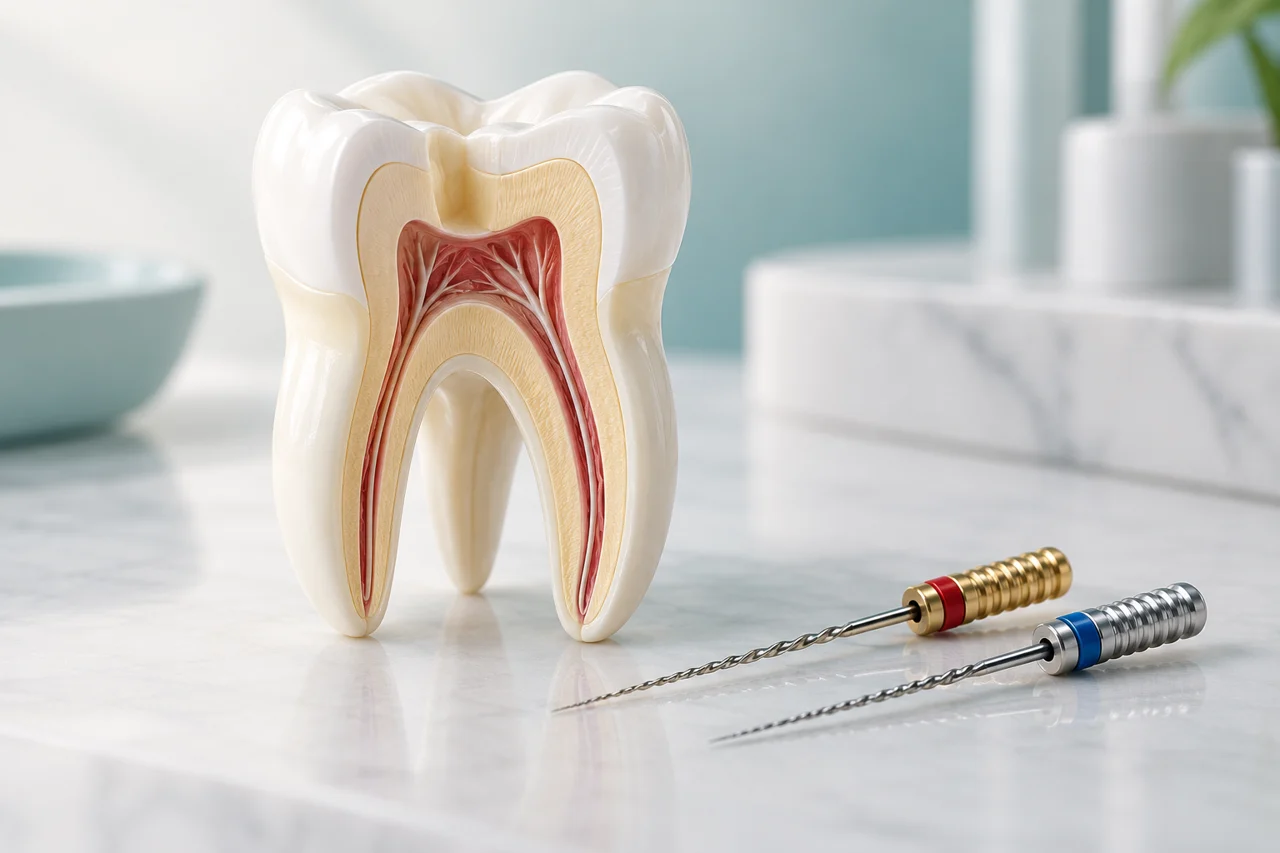
Modern root canals are designed for relief
Root canal therapy removes inflamed or infected tissue, disinfects the inside of the tooth, and seals it against reinfection. With modern anesthesia, many patients find the visit similar to receiving a filling.
Treatment designed around your needs
Common warning signs
Persistent pain, prolonged sensitivity, tooth darkening, swelling, a gum bump, or pain when biting.
Why timing matters
Early treatment can prevent infection from spreading and may save the natural tooth.
Why patients choose root canal treatment
Keep your tooth
Preserve your bite, jawbone health, and natural smile.
Remove infection
Eliminate infected tissue before it spreads.
Long-lasting relief
A properly restored root-canal tooth can last for many years.
Quick recovery
Most patients return to normal activities the next day.
What to expect
Diagnosis
An examination and digital X-rays locate the infection.
Anesthesia & access
The tooth is numbed and a small opening is created.
Cleaning
The pulp is removed and the canals are shaped and disinfected.
Seal & restore
The canals are filled and the tooth is protected, often with a crown.
Root Canal Treatment FAQs
Does a root canal hurt?
Local anesthesia keeps treatment comfortable, and the procedure relieves pain caused by infection.
How long does it take?
Most treatments take 60–90 minutes; complex cases may require another visit.
Is a crown always needed?
Many treated teeth benefit from a crown to prevent fracture and restore chewing strength.