
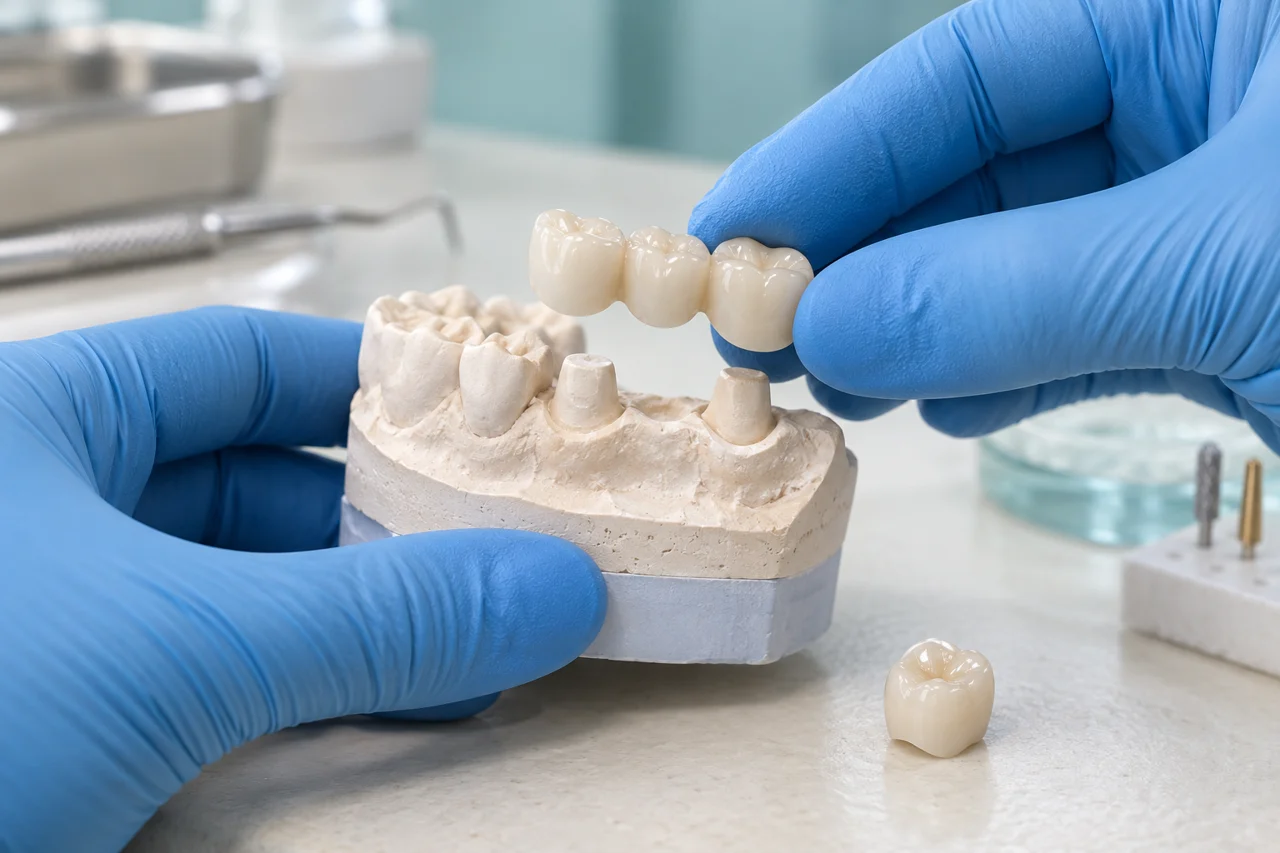
Begin with the problem being solved
A crown and a bridge can look similar when you hold the finished restorations, but they serve different purposes. The useful question is not which one is universally better. Ask what is happening with your tooth and what the restoration needs to accomplish.
A crown covers an existing tooth
A crown covers a tooth to help restore its shape and function. It may be considered when a tooth is weakened, has a large restoration or needs protection after other treatment. Your dentist will evaluate whether there is enough sound tooth structure and which material suits the situation.
A bridge replaces a gap
A bridge replaces one or more missing teeth. A fixed bridge is supported by nearby teeth or implants, depending on the design. The health of the supporting structures and your ability to clean around them matter to the treatment plan.
Compare the whole plan
- Which teeth would be treated or used for support?
- What other replacement options are reasonable?
- What material is proposed and why?
- Will there be a temporary restoration?
- How will I clean around the finished work?
- What is included in the written fee estimate?
Ask to see the proposed work on a model or image. If you are replacing a missing tooth, request an explanation of how a bridge compares with an implant or removable option in your own case.
Discuss comfort and maintenance
Tell the dentist about previous dental work, any concerns about your bite, and what matters to you about appearance. After placement, follow the care instructions and contact the office if the restoration feels wrong. Keep your planned follow-up visits so questions can be addressed directly.